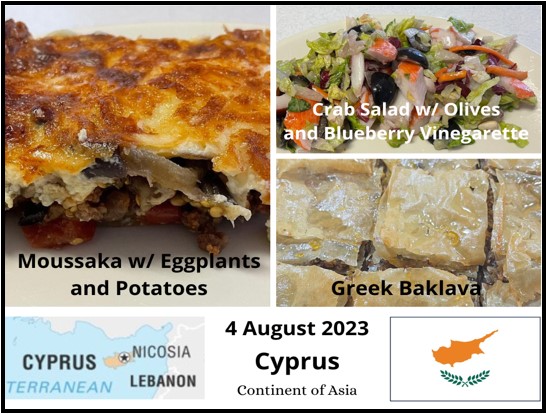
Cyprus is located in the continent of Asia. It has Turkey to the north, Syria to the east, Lebanon to the southeast, Israel to the south, the Mediterranean Sea to the west and Greece to the far northwest.
The conventional capital is Nicosia.
The official languages are Greek, Turkish, Republic of Cyprus, Turkish Republic of Northern Cyprus.
The climate is Mediterranean, with hot, dry summers from June to September, and rainy winters from November to March.
The staple foods are grilled meat kebabs, grilled sausage, pork marinated in coriander, fried halloumi cheese, olives, pita bread, root vegetables, lamb, artichokes, chickpeas and rabbit stew, to include much, much more (https://www.mercuryholidays.co.uk/destination/europe/cyprus/holidays/travel-guides/food-of-cyprus).
https://www.britannica.com/place/Cyprus
TRADITIONAL MOUSSAKA WITH EGGPLANTS (AUBERGINES) AND POTATOES (https://www.mygreekdish.com/recipe/mousakas/):
– 6 eggplants
– 5 potatoes (optional)
– vegetable oil (for frying the eggplants)
For the meat sauce:
– 26oz. beef or lamb, minced
– 2 red onions, chopped
– 2 cloves of garlic, chopped
– 14oz. can chopped tomatoes
– 2 TBSP tomato paste
– 1 tsp sugar
– 1 glass of red wine
– pinch of sea salt and freshly ground black pepper
– 1 bay leaf
– pinch of cinnamon or one cinnamon stick
– ¼ C olive oil
For the bechamel sauce:
– 31 fl. oz milk
– 4oz butter
– 4oz flour
– pinch of nutmeg
– 2 egg yolks
– 3.5oz Parmigiano-Reggiano or Kefalotyri or your favorite hard cheese
– salt to taste
- To prepare this Greek moussaka recipe, begin by preparing the eggplants. Remove the stalks from the eggplants and cut them into slices, 1 cm thick. Season with salt and place in a colander for about half an hour.
- Rinse the eggplants with plenty of water and squeeze them with your hands, to get rid of the excessive water. Pat them dry and fry in plenty of oil, until nicely colored.
- Place the fried eggplants on some paper, in order to absorb the oil. (For a lighter version of the traditional Greek moussaka try drizzling the aubergines with some olive oil and bake them for 20 minutes instead of frying them). Set aside when done.
- If you are adding potatoes to your moussaka, it’s time to slice them into 0.5cm, half a finger width slices. Fry them or bake them in the same way as the eggplants. Season with some salt and set them aside when done.
- Prepare the meat sauce for the moussaka. Heat a large pan to medium-high heat and add the olive oil.
- Stir in the chopped onions and sauté, until softened and slightly colored.
- Stir in the mince, breaking it up with a wooden spoon and sauté. When it starts to brown, add the garlic and tomato paste and sauté until the garlic starts to soften. Pour in the red wine to deglaze the meat juices and wait to evaporate.
- Add the tinned tomatoes, the sugar, a pinch of cinnamon, 1 bay leaf and a good pinch of salt and pepper.
- Bring to the boil then turn the heat down and simmer with the lid on for about 30 minutes or until most of the juices have evaporated. Set aside when done.
- Prepare the béchamel sauce for the moussaka.
- Use a large pan to melt the butter over low-medium heat.
- Add the flour whisking continuously to make a paste.
- Add warmed milk in a steady stream; keep whisking in order to prevent your sauce from getting lumpy. If the sauce still needs to thicken, boil over low heat while continuing to stir. Its consistency should resemble a thick cream.
- Remove the béchamel pan from the stove and stir in the egg yolks, salt, pepper, a pinch of nutmeg and the most of the grated cheese. Reserve some cheese to sprinkle on top! Whisk quickly, in order to prevent the eggs from turning an omelette!
- Season with salt to taste.
- Take one spoon full of béchamel and stir it in the meat sauce. Set the béchamel sauce aside.
- Now assemble the moussaka.
- For this moussaka recipe you will need a large baking dish, approx. 20x30cm / 8x12inch and 8cm/3 inch deep).
- Butter the bottom and sides of the pan and layer the potatoes first (if you’re using them), then half the eggplants.
- Pour in all of the meat sauce and spread it out evenly.
- Add a second layer of eggplants, top with all of the béchamel sauce and smooth out with a spatula.
- Sprinkle with the remaining grated cheese.
- Preheat you oven at 350F and bake your musaka for about 60 minutes or until its crust turns light golden brown.
- Even though it will be really hard to do so, you should wait for the moussaka to cool down and be just warm to the touch before cutting into pieces. This will prevent the béchamel sauce from pouring out when you’re cutting your pieces.
- Serve the Moussaka with a refreshing Traditional Greek Salad and enjoy over a glass of wine!
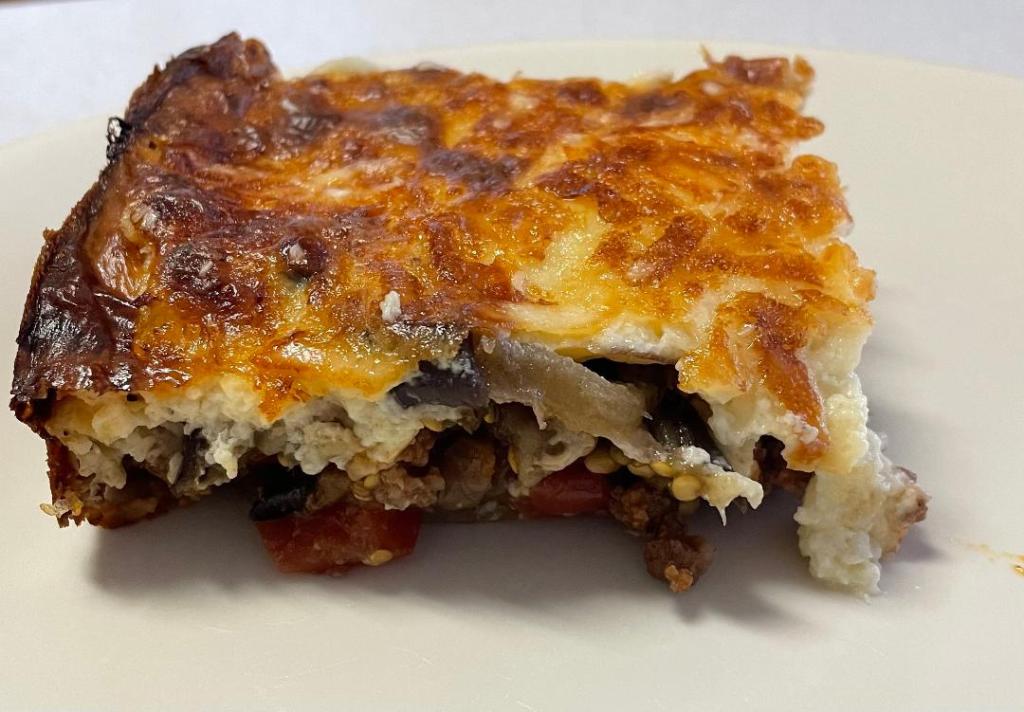
This recipe is sssoooo delicious!! I like eggplant already, but anyone who has never tasted it before, would love this!
CRAB SALAD WITH OLIVES AND BLUEBERRY VINEGARETTE
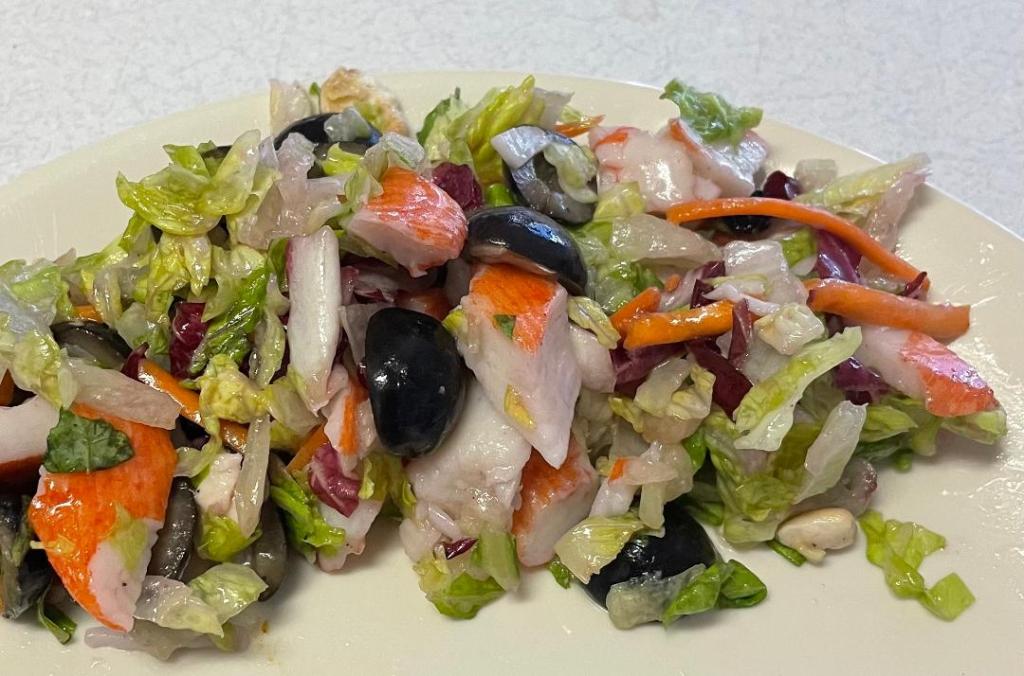
I was going to make a Traditional Greek Salad, but did not have all of the ingredients, so substituted this salad. Still very complimentary to the Moussaka.
TRADITIONAL GREEK BAKLAVA WITH WALNUTS AND HONEY (https://www.mygreekdish.com/recipe/baklava-greek-walnut-pistachio-cake/):
For the Baklava:
– 25-30 sheets of phyllo dough
– 17oz walnuts, chopped (or a mix of walnuts, pistachios, and almonds)
– 2 tsp cinnamon powder
– 2 tsp ground clove
– 10oz butter, melted
– some whole cloves for garnish (optional)
For the syrup:
– 20oz sugar
– 14oz water
– 2.8oz honey or glucose
– zest of 1 lemon or orange
– 1 cinnamon stick
- Star by melting the butter in a saucepan over low heat, being careful not to burn it.
- Use a cooking brush to butter the bottom and sides of a baking dish pan (for this baklava recipe you will need a large baking pan approx. 15X12”).
- Begin by layering the sheets of phyllo on the bottom of the baking dish to form the base.
- Layer the sheets one at a time, making sure to sprinkle each one with melted butter.
- Use about 10-12 layers for the base.
- In a large bowl, mix the chopped nuts, the cinnamon and ground clove.
- Sprinkle the nut mixture over the phyllo base and continue forming the top of the baklava.
- Top the nuts with the rest of the phyllo sheets (10-15 of them), sprinkling each one with melted butter and brush the top of the baklava with enough butter.
- You could also try adding some of the filling in between layers of filo.
- Place the baklava in the fridge for 15 minutes to make it easier to cut into pieces.
- Remove from the fridge and using a sharp knife cut all the way down into the pieces.
- If you fancy the taste of clove, place one whole clove into the middle of each baklava piece and sprinkle the top with some cold water.
- Place the baklava in preheated oven at 300F on the lower rack (both top and bottom heating elements on), and bake for about 1-1/2 ~ 2 hours, until all the phyllo layers are crisp and golden.
- Prepare the syrup.
- Into a small pot mix all the ingredients for the syrup (except the honey) and bring to a boil.
- Boil for about 2 minutes until the sugar is dissolved.
- Take it off the heat and stir in the honey.
- Let the syrup cool down.
- You can also put the syrup in the fridge.
- As soon as the baklava is ready, ladle slowly the cold syrup over the hot baklava, until it is fully absorbed.
- Let the baklava cool down completely and serve after the syrup has soaked throughout.
Enjoy!!

This turned out better than I had anticipated, but you can tell I am a beginner.
 Travel Global Food